
In a historic feat for space exploration, SpaceX, the private aerospace company founded by Elon Musk, has achieved another remarkable milestone. Earlier today, the company successfully launched its first manned mission to Mars, marking a giant leap forward in humanity's quest to explore the Red Planet.
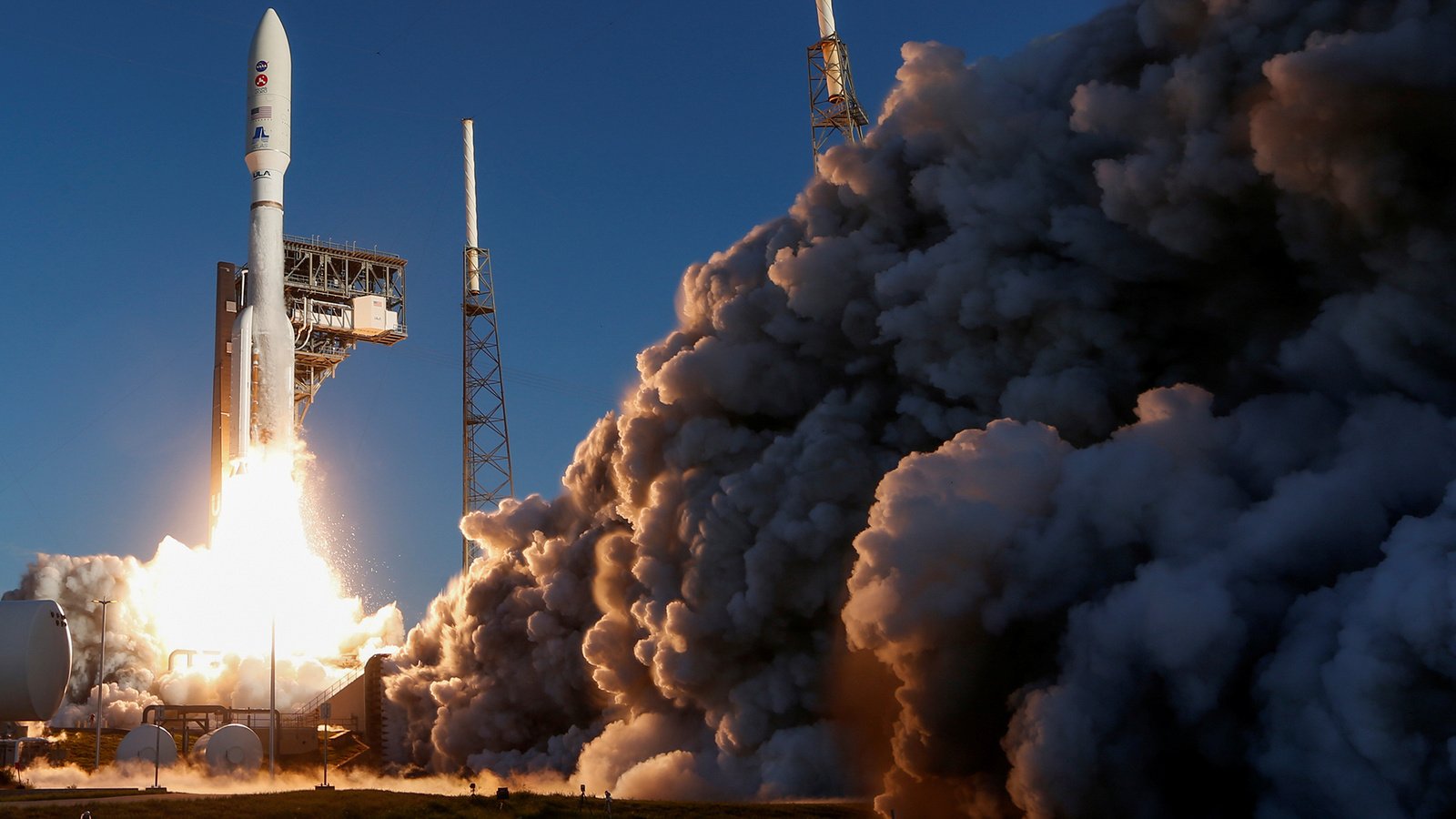
The mission, named "Mars Endeavour," took off from SpaceX's launch site at Cape Canaveral, Florida, amidst an atmosphere of excitement and anticipation. Aboard the state-of-the-art spacecraft, codenamed "Starship Mars," were four courageous astronauts selected from a rigorous process that attracted thousands of applicants worldwide.
The crew, consisting of two men and two women, brings together a diverse group of scientists, engineers, and explorers. Their mission objectives include conducting extensive research on Mars' geological and atmospheric conditions, searching for signs of past or present life, and laying the groundwork for future colonization efforts.
SpaceX's CEO, Elon Musk, who witnessed the launch firsthand, expressed his delight and admiration for the team of astronauts. "This is a historic moment for humanity," Musk said during a post-launch press conference. "We're embarking on a journey that will redefine our understanding of the universe and open up endless possibilities for future generations."
The Starship Mars, equipped with cutting-edge technology, is designed to transport humans and cargo efficiently over long distances in space. It is powered by a revolutionary propulsion system that combines the latest advancements in chemical and electric propulsion, enabling faster and more efficient interplanetary travel.
The journey to Mars is expected to take approximately six months, during which the crew will endure various physical and psychological challenges. To ensure their well-being, SpaceX has equipped the spacecraft with state-of-the-art life-support systems and provided the astronauts with extensive training in endurance, survival, and scientific experimentation.
Upon reaching Mars, the astronauts will conduct a series of carefully planned experiments and exploratory missions, focusing on key areas of scientific interest. These include the search for evidence of water, studying the planet's geology and climate, and analyzing the potential for sustained human habitation.
The success of this mission represents a significant milestone not only for SpaceX but for the entire space exploration community. It highlights the increasing role of private companies in pushing the boundaries of space travel and fostering innovation in the industry.
The Mars Endeavour mission also serves as a catalyst for renewed interest and investment in space exploration, inspiring nations and organizations around the world to collaborate in the pursuit of scientific discovery and the expansion of human presence beyond Earth.
As the Starship Mars hurtles through the vast expanse of space towards the Red Planet, humanity watches with bated breath, eagerly awaiting the arrival of the brave astronauts who will boldly go where no humans have gone before. The success of this mission will undoubtedly shape the future of space exploration and pave the way for the next generation of interplanetary travel and discovery.